Big Picture Event Storming – spotting what's missing
This post takes a closer look at how we handled the second part of the Big Picture Event Storming workshop, carried out as part of our Domain-Driven Design show-case project.
Our Domain-Driven Design show-case project started with an opening Big Picture Event Storming session. To recap briefly: we kicked off with chaotic exploration, in which everyone taking part dumped all the relevant domain events they could think of. Next, we started putting the chaos in order by sorting the events, getting rid of duplicates and polishing them.
By the end of the session, the events were arranged chronologically. We also marked a hot spot pointing to the areas we weren’t certain about. On top of that, a few yellow sticky notes captured important details we didn’t want to lose.
As an extra, we identified the first sub-processes taking place inside the main devices inventory process. We highlighted them and gave them working names. This is how our Miro board looked at the end:
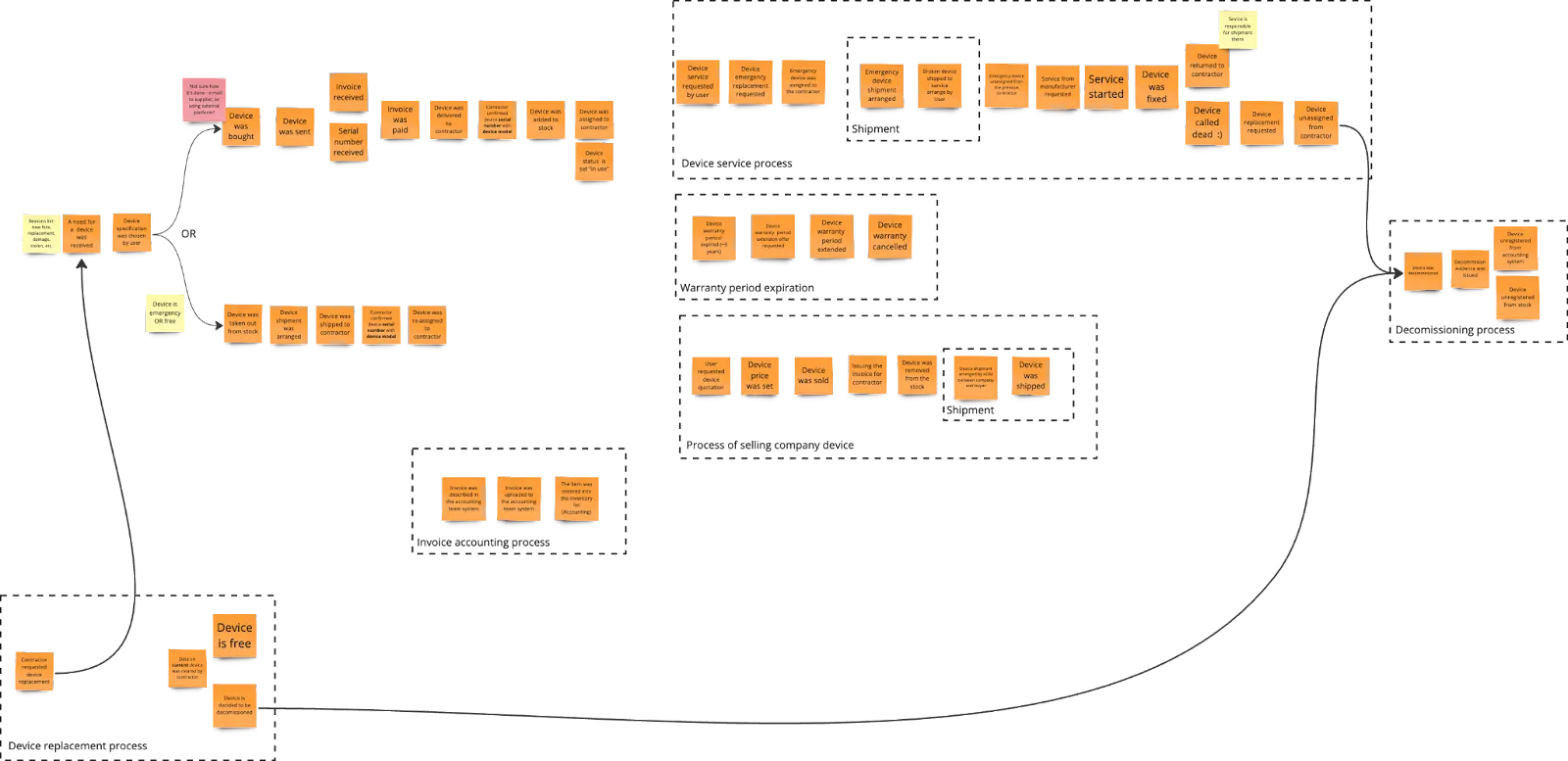
Picture 1. The Miro board after the timeline enforcement phase, CLICK to open it on Miro
It all seems fairly clear. Yet even with everything arranged and the board looking neat, we knew our earlier modeling might still hide some gaps or inconsistencies. Luckily, Big Picture Event Storming offers two techniques for uncovering them – explicit walk-through and reverse narrative. Knowing what we don’t know is frequently valuable for stakeholders, particularly if they weren’t aware of it beforehand.
This post looks closely at how we handled the second part of our workshop. I’ll describe the techniques we applied to make sure our picture of the process was complete. Before that, though, a bit of theory on ways of finding gaps in the flow of events.
Explicit walk-through
The explicit walk-through is an Event Storming workshop technique for verifying that the model is accurate and complete. It consists of a thorough review of the whole sequence of events placed on the board during the workshop. Everyone taking part gets to examine each step of the process together, which lets us notice inconsistencies, redundant elements or missing pieces. It guarantees a shared understanding of the business process.
While doing this, the facilitator may ask one participant to begin narrating the story based on the events, in chronological order. The storyteller role can be handed from person to person so that everyone stays involved.
To validate the process steps properly and detect possible gaps or inconsistencies, asking the right questions while walking through the events is essential. The facilitator typically kicks this off, but participants frequently recognize how useful it is and join in with their own questions. Typical helpful questions for finding elements that may be missing include:
- What caused this event?
- Could anything else cause this event?
- What does this event change in the system’s state?
- What might take place between this event and the preceding one?
- What comes after this event?
- What impact does this event have on the business?
- Could this event fail to happen? If so, what would that lead to?
- What if this event occurs more than once?
- Does this event have any exceptional cases?
- Can this event be broken down into smaller, more specific events?
Such questions let us uncover events we may have overlooked at first, verify how important each event is, and investigate what takes place before and after it. They also show us whether there are alternative paths the process could take.
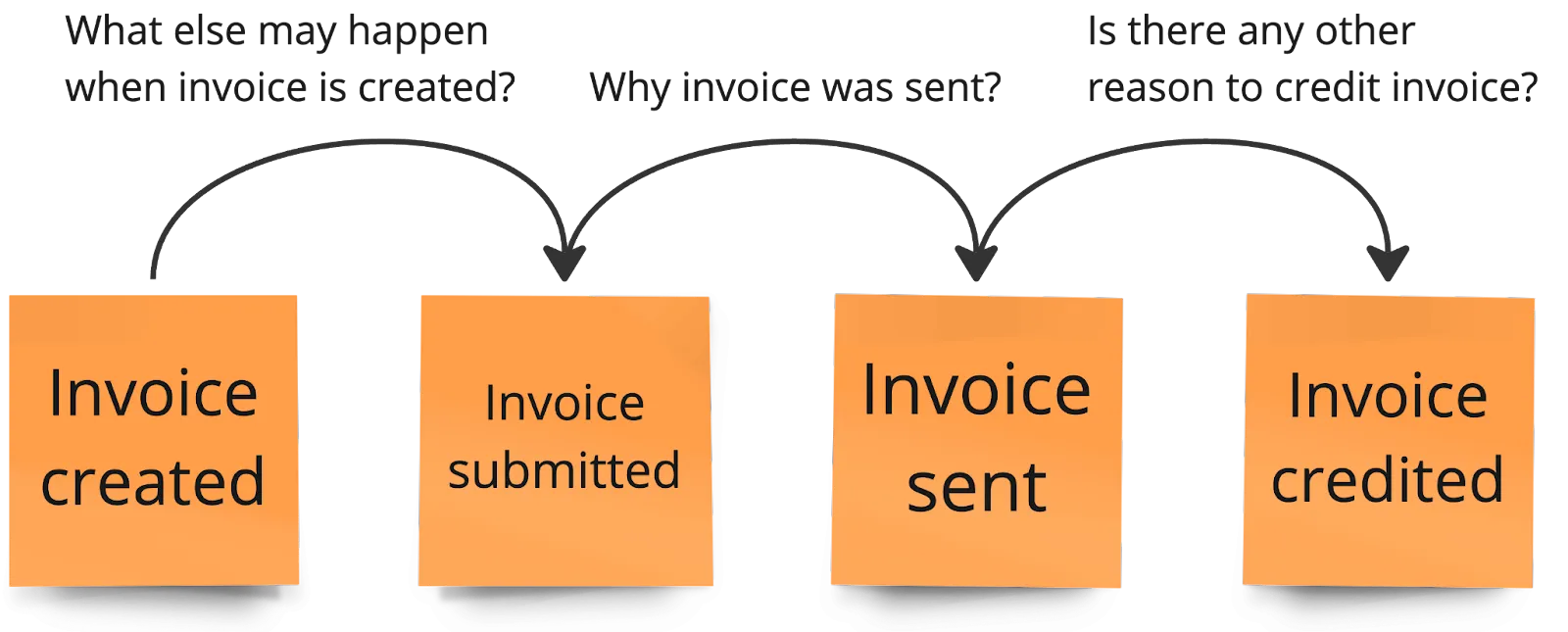
Picture 2. Asking questions while stepping through the events with the explicit walk-through approach. We begin on the left (the first event) and move along the timeline.
That’s a long list of questions, and they’re only examples. There’s no need to ask every one of them about every event – that would be overkill. Seasoned facilitators and modelers can tell which questions fit which events.
The crucial point of this approach is that we go through the events in the order in which they occur, as established during the initial brainstorming phase. That sets it apart from the other method we use to verify our work, the reverse narrative.
Reverse narrative
A different technique we frequently apply to find possible gaps in the process is the reverse narrative. In contrast to the explicit walk-through, we begin at the end of the process, i.e. with the final event on the timeline. This method gives a distinctive point of view that can reveal hidden assumptions, skipped steps or parts of the process that are more complex than necessary.
Starting from the intended result and asking, “How did we get here?” pushes participants to reflect critically on what came before. Viewing things in reverse makes us question whether every event is truly needed or could be made simpler.
As in the explicit walk-through, we ask specific questions to verify that each event makes sense and to find any we may have overlooked. The questions listed earlier apply here as well, adjusted slightly to suit the backward view. For example:
- What must happen for this event to take place?
- In what other way could this result have been reached?
- Which conditions had to be met for this event to take place?
- What might have stopped this event from taking place?
Reasoning backwards is not how we normally operate. Ask yourself what feels easier and more natural: reciting the alphabet from A to Z, or from Z to A? Thinking in reverse like this can make us spot things that slipped past us the first time.
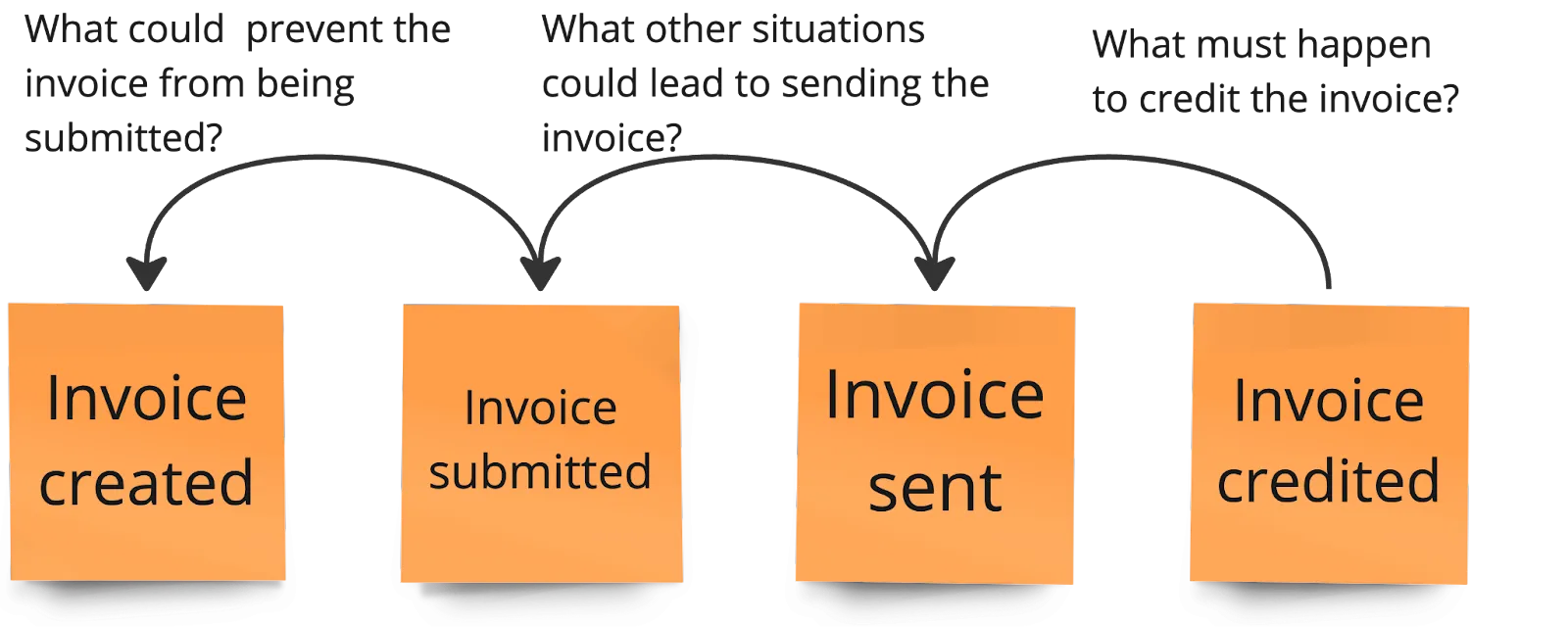
Picture 3. Asking questions while stepping through the events with the reverse narrative approach. We begin on the right (the last event) and move against the direction of the timeline.
The reverse narrative technique, or a comparable method of backward analysis, is widely used by law enforcement and investigative bodies (e.g., police) when investigating crimes and analyzing events. It is particularly helpful for exposing inconsistencies in a suspect’s account. In Event Storming, however, we’re not trying to catch anybody lying; we want to make sure the process they describe is complete and free of unstated assumptions.
The main advantage of both techniques is that they make sure the modeled process is complete and accurately captured by the events. Beyond that, they help all participants arrive at a shared understanding of the process, so that domain knowledge is both spread and verified across teams. This narrows the gap between technical and non-technical participants and makes complicated domain logic approachable and clear to everyone. It also aids in building the ubiquitous language in which the domain model is expressed.
With the theory out of the way, let’s look at how it worked out in our session.
Finding the gaps in our processes
In our workshop, we went with the reverse narrative technique. The reason: we (the modelers) knew only a little about the process we were working on, since we merely used it. Our experts, on the other hand, are well aware of many hidden aspects that we aren’t.
Because participants differ in how well they know the process, the reverse technique lets us look at it more critically. In my experience, the explicit walk-through works better when everyone already has a similar understanding of the process. That happens rarely, so the reverse narrative is usually our pick.
Decommissioning processes
Beginning at the end of the process, we soon saw that the reasons for decommissioning a device weren’t what we had first assumed. After the previous session, our understanding was that a device gets decommissioned either when the service finds it fully damaged and beyond repair, or when it is selected for decommissioning after being replaced. This is what we had after that last session:
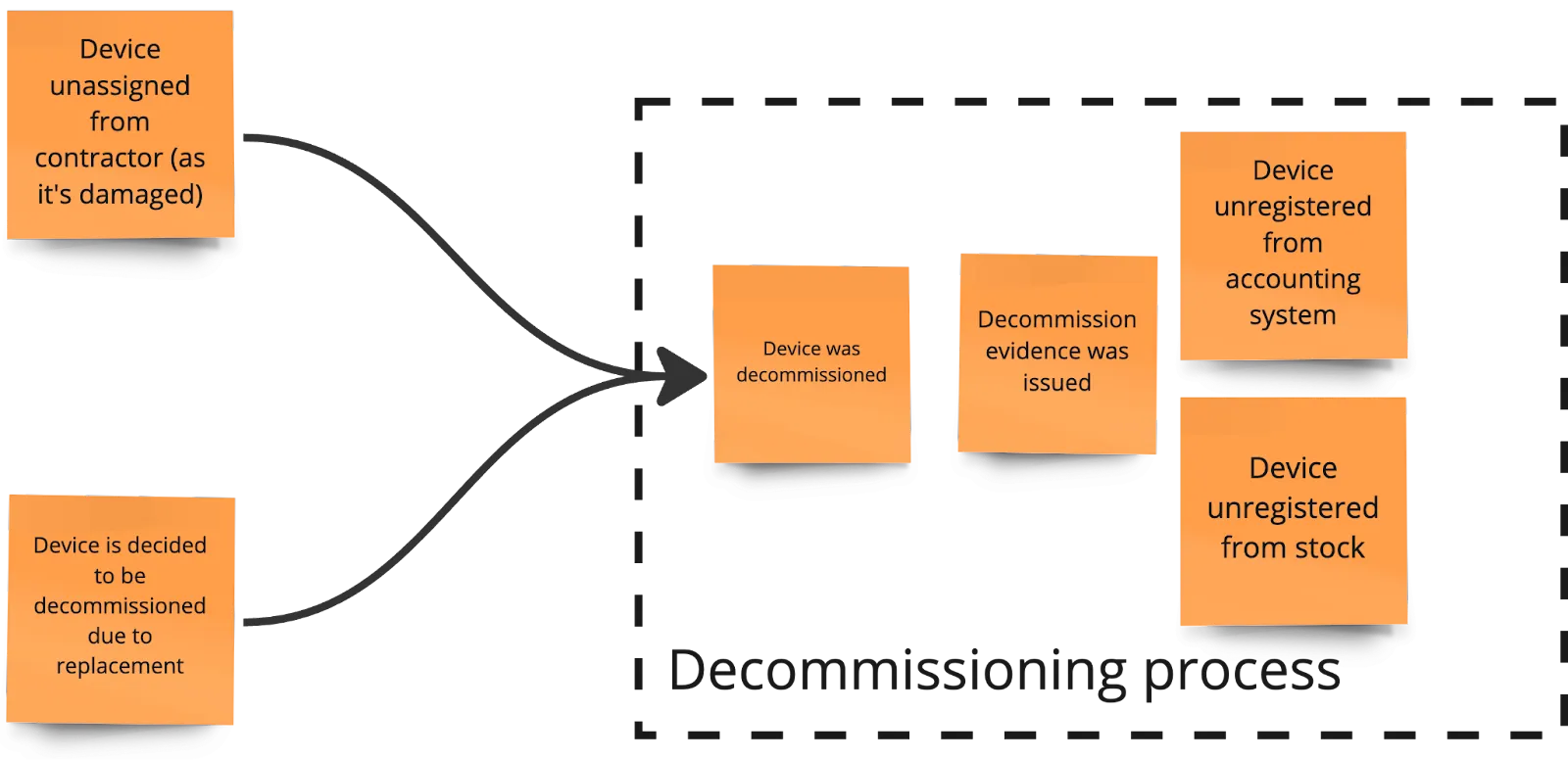
Picture 4. Decommissioning process events after the first session
While both scenarios were broadly right, we noticed that the order of events was wrong. In particular, when the service declares a device non-functional, what actually happens first is that the replacement procedure due to damage is started. Only after that subprocess does the decommissioning process get triggered.
What’s interesting is that during the reverse narrative, we came across a cyclical process of reviewing the inventory of devices. This illustrates an important reason for using the technique – it lets us notice subprocesses, overlooked events or alternative ways of working that weren’t obvious initially and hadn’t been spotted.
Within this newly found review subprocess, a device can be kept in stock, sold, or decommissioned if it’s deemed too old to be reused. That means the decommissioning process can also start in this scenario. After some discussion, this is what we arrived at:
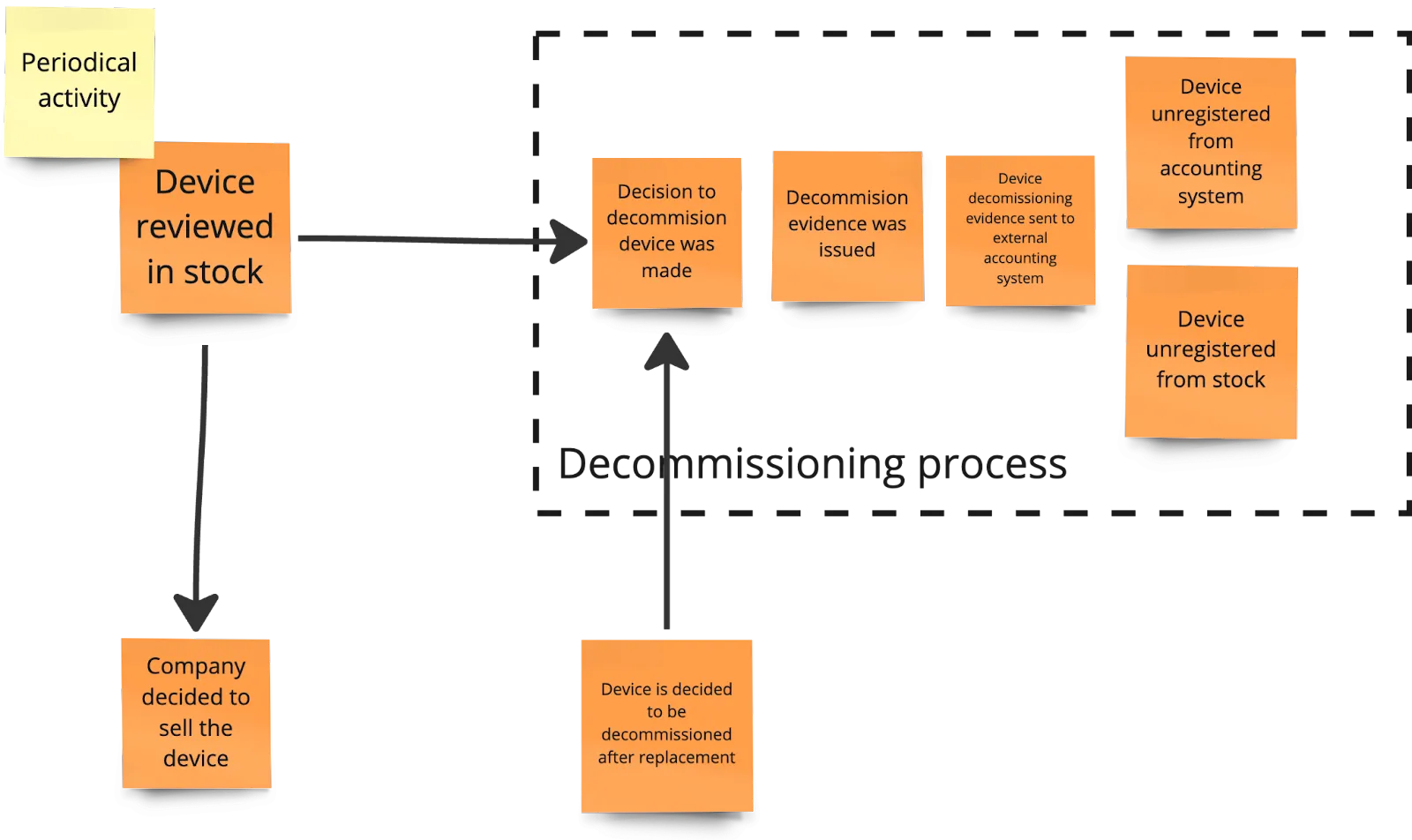
Picture 5. The updated entry point into the decommissioning process after the reverse narrative phase
Apart from the changed starting points of this process mentioned above, we also learned that the process works somewhat differently from what we had assumed. In particular, the documentation confirming that a device has been decommissioned, produced once the decision is taken, is also forwarded to the external accounting system.
We also reworded the first event from “Device was decommissioned” to “Decision to decommission device was made” so that it better captures what the event means. At that moment the device hasn’t been physically decommissioned yet; we have only decided to do it.
Device replacement process
Device replacement was another case where the reverse narrative improved our grasp of the process. At first, we thought it was simple; at the end of the first session, it looked like this:
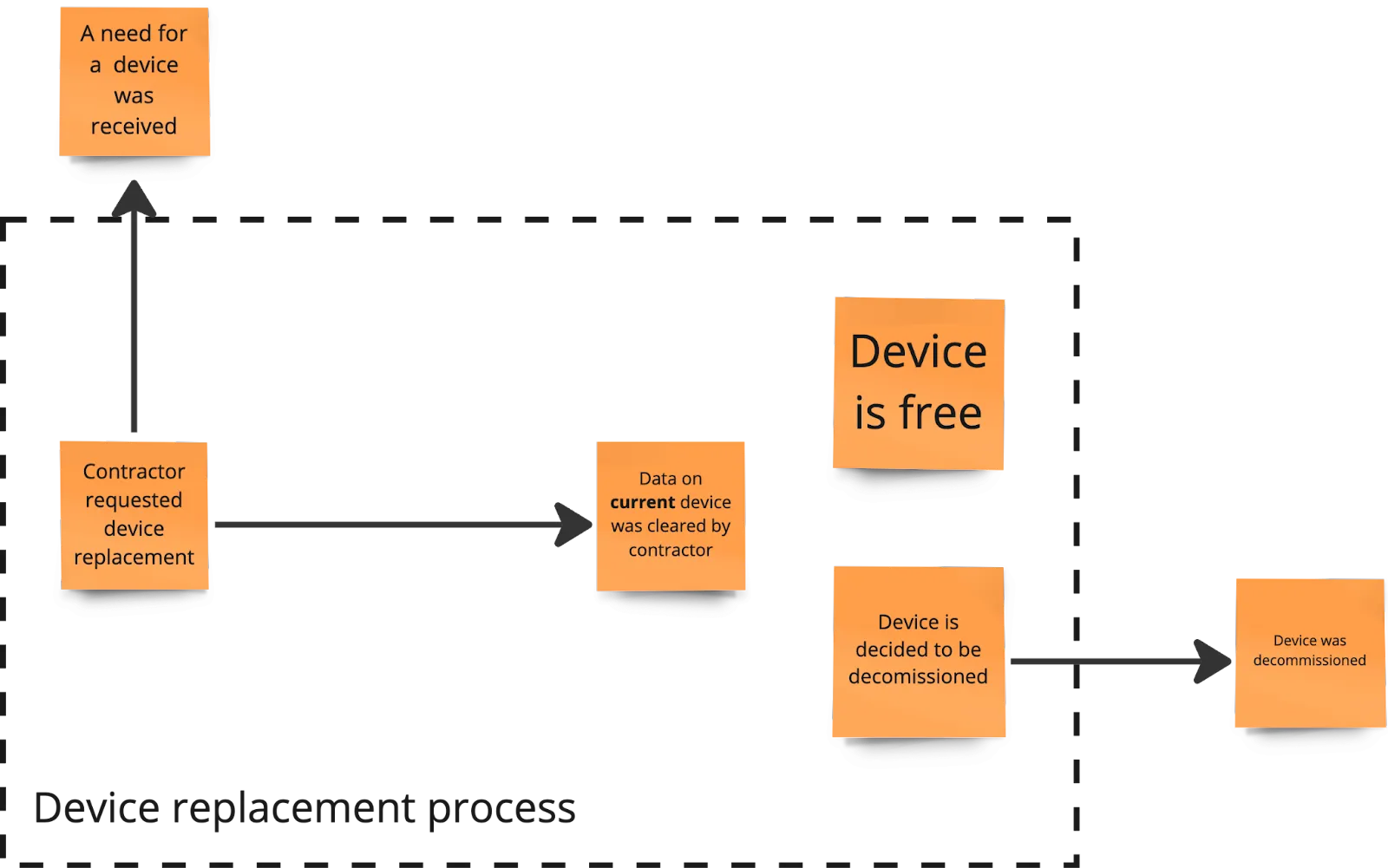
Picture 6. The device replacement process at the close of the first session
Back then, the process had a single starting point – a contractor asking for a replacement. That kicks off the standard device-issuing process, much like for a new contractor. Depending on its condition, the “old” computer could then go back to inventory or be decommissioned, though only once the contractor has wiped the device’s data.
Yet when we went through the events backwards and asked the right questions, the picture became more complicated:
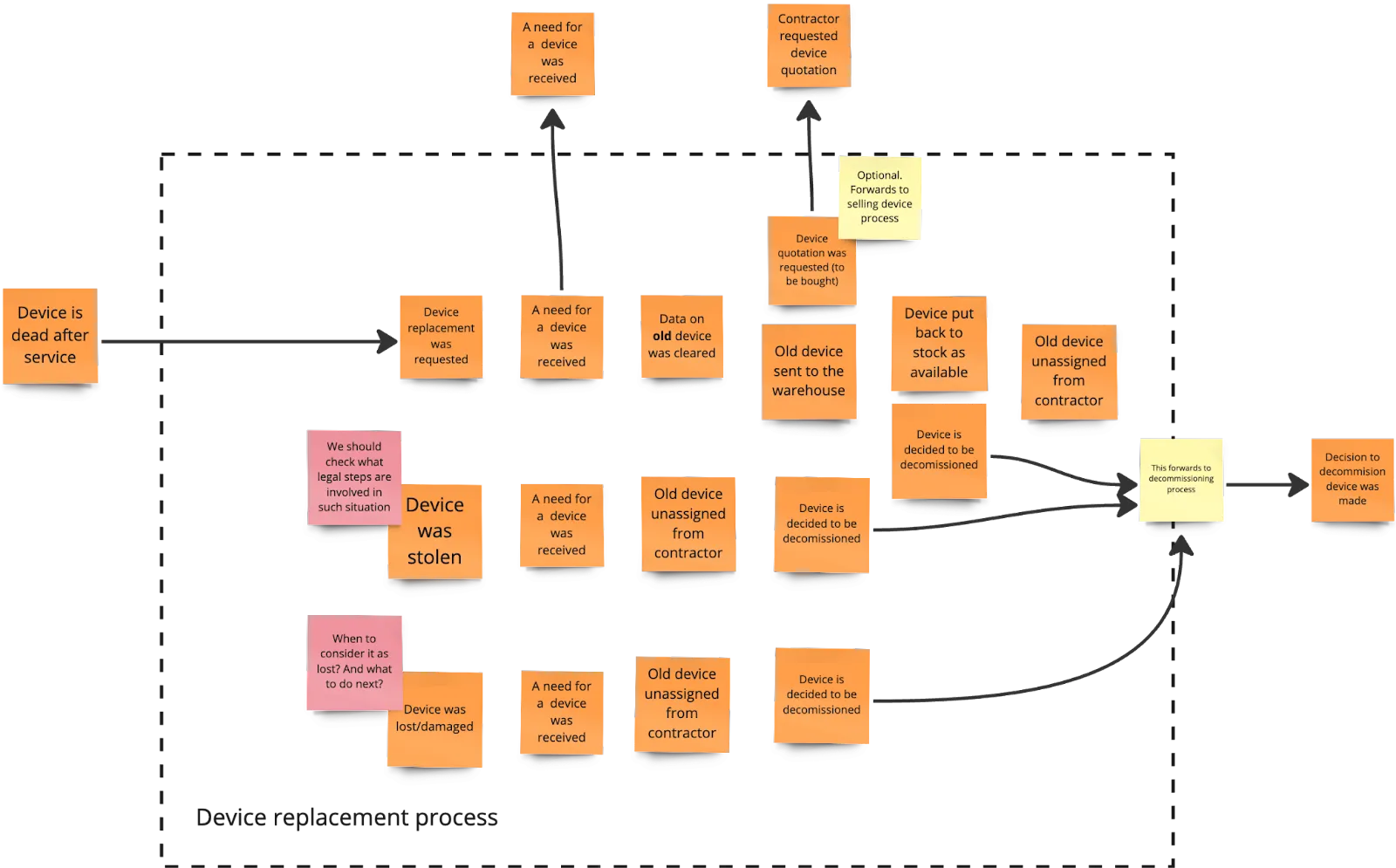
Picture 7. The device replacement process after the reverse narrative
To begin with, we found more ways this process can start. It isn’t only a contractor requesting a new device because the old one is out of date. The contractor could, for example, lose the device, it could get damaged unexpectedly, or it could even be stolen. Also, if the service concludes that the computer is beyond repair, that too signals the start of the replacement process, as I described when talking about the changes to the decommissioning process.
Each of these cases requires a new device, which sets off the main device issuing process. If it’s only a replacement, the contractor may buy the device, which starts the process of selling a company device. Otherwise, the device either goes back to the inventory pool, available for another contractor, or is decommissioned.
When a device is lost, stolen or damaged, the decommissioning process starts too. And whatever the scenario, the device has to be unassigned from the contractor. We also looked into what further steps are needed when a device is lost or stolen. But because we have (luckily) never faced such incidents, we chose to postpone that conversation, which is why two hot spots were placed on the events tied to those scenarios.
Clearly, this process changed a lot. We found various scenarios with different flows and uncovered events that hadn’t been spotted before. That demonstrates how powerful the reverse narrative technique is.
Wrap-up
This article described how we applied the reverse narrative technique to find gaps in the process modeled in our previous session. I showed how the method helped us understand and improve the decommissioning and device replacement processes. Those were only two examples demonstrating how effective the approach is; the discussions in this session revealed further events as well.
We also went back to the other subprocesses identified during the first session. Ultimately, their scope stayed largely the same, though, as I said, some of them were substantially reworked. We additionally concluded that two smaller subprocesses (the invoice accounting process and the warranty period expiration process) were more or less side processes that don’t influence device availability, so we spent less time on them. That was a deliberate decision, though.
In the end, the board looked like this:
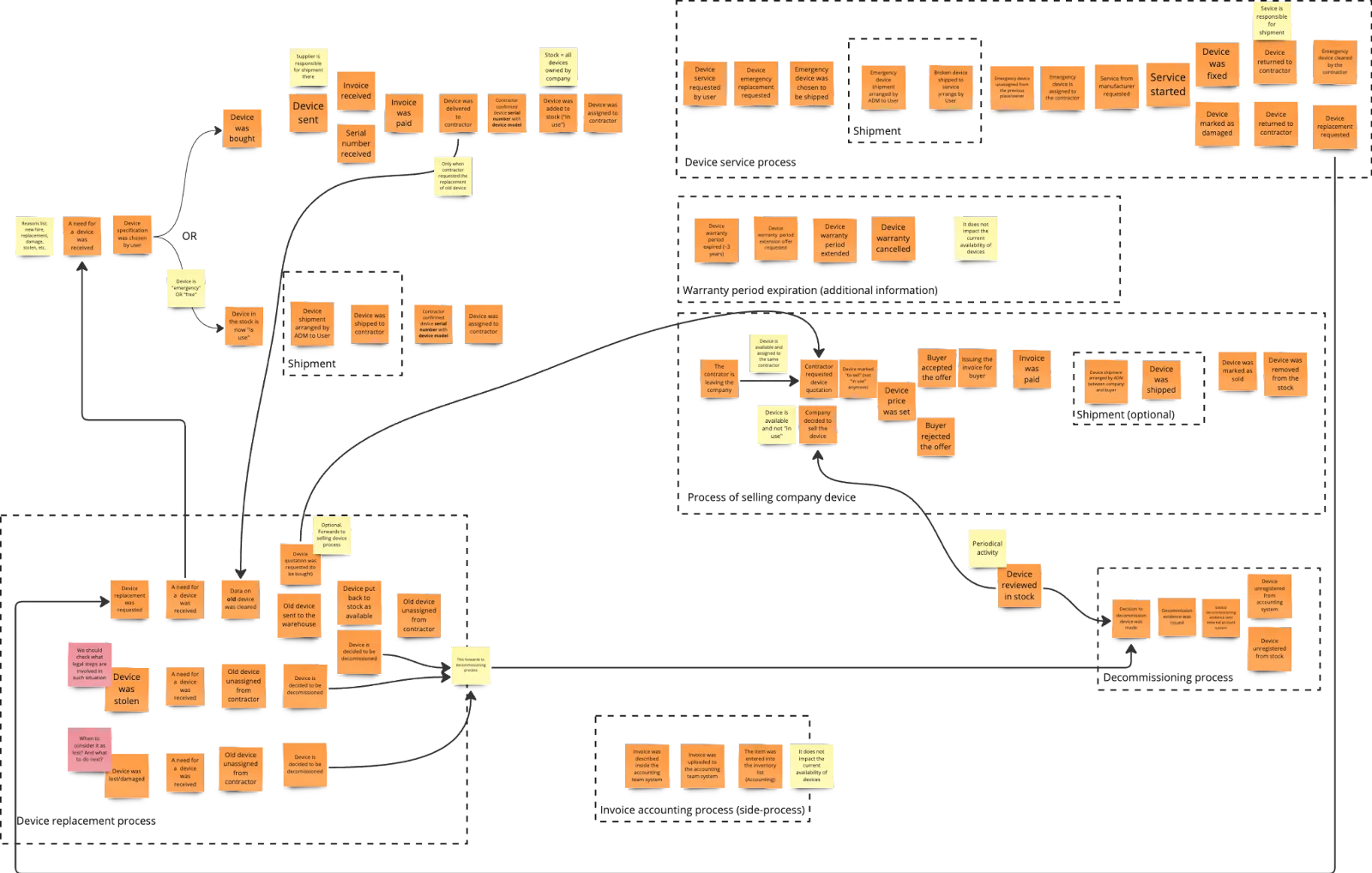
Picture 8. The board after the reverse narrative phase. CLICK to open it on MIRO
It looks even tidier than at the start of this session, which was our goal. The real value of the session, however, was in digging into the subtleties of the process, finding gaps that hadn’t surfaced earlier, and building a common understanding of the process we were working on in the workshop.
Next session, we’ll try to pin down the actors and systems taking part in our device inventory process. Watch this space!